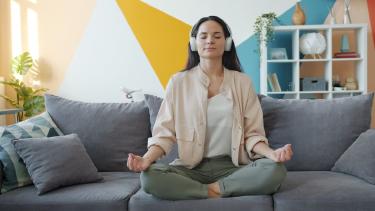
Coherent Breathing for Daily Nervous System Regulation

You know that feeling when your heart’s racing, your mind won’t shut up, and everything feels like too much? Yeah, we’ve all been there. Your nervous system is basically stuck in overdrive, and no amount of scrolling through your phone is gonna fix it.
Here’s where coherent breathing comes in. It’s not some mystical woo-woo thing-it’s actually a legit way to tell your nervous system to chill out. The best part? You already know how to do it. You just need to do it differently.
What Makes Coherent Breathing Different
Most breathing exercises feel complicated. Count to four, hold for seven, exhale for eight-who can remember all that when you’re stressed?
Coherent breathing is stupid simple: breathe in for 5 seconds, breathe out for 5 seconds. That’s it - no holds, no complicated patterns. Just smooth, even breaths at a rate of about 6 breaths per minute.
Why 6 breaths per minute? Because that’s the sweet spot where your heart rate, breathing, and blood pressure start syncing up. Scientists call this “resonance frequency. " Your body calls it “finally, some peace and quiet.
Think of it like tuning a guitar. When you hit the right frequency, everything resonates together. Your cardiovascular system, respiratory system, and autonomic nervous system all start humming the same tune.
The Vagus Nerve Connection
Okay, quick anatomy lesson that’ll actually matter to your daily life.
Your vagus nerve is this massive nerve that runs from your brain down through your chest and into your gut. It’s the main highway of your parasympathetic nervous system-the part that helps you rest, digest, and not freak out about everything.
When you do coherent breathing, you’re basically giving your vagus nerve a workout. Each slow exhale stimulates it, which signals your body: “Hey, we’re safe. No need to panic. " Over time, this strengthens what’s called your “vagal tone.
Higher vagal tone means you bounce back from stress faster. You’re less reactive. That annoying coworker doesn’t ruin your whole day. Traffic jams don’t spike your blood pressure into the stratosphere.
I started doing this during my commute last year. Five minutes of coherent breathing before walking into the office made a ridiculous difference. Instead of carrying road rage into meetings, I’d actually arrive feeling… normal - calm, even?
How to Practice (Without Overthinking It)
You don’t need a meditation cushion, fancy app, or perfect silence. You just need 5-10 minutes and the ability to count to five.
Here’s the deal:
**Find a comfortable position. ** Sitting, lying down, standing-doesn’t matter. Just don’t do this while driving.
Breathe through your nose if you can. Mouth breathing works too, but nasal breathing activates your parasympathetic response more effectively.
**Inhale for 5 seconds. ** Count slowly: one-one-thousand, two-one-thousand, three-one-thousand, four-one-thousand, five-one-thousand. Fill your lungs comfortably-you’re not trying to inflate a balloon.
**Exhale for 5 seconds - ** Same counting method. Let the air flow out naturally. No forcing.
**Keep going for 5-10 minutes - ** Your mind will wander. That’s fine. When you notice, just come back to counting.
Some people prefer 4 - 5 or 5. 5 seconds instead of exactly 5. That’s cool. The goal is finding your personal resonance frequency-the pace where breathing feels effortless and your body relaxes.
When to Use This Thing
Coherent breathing is more than for emergencies. Sure, it works when you’re anxious or overwhelmed, but the real magic happens when you make it a daily practice.
Morning routine: Five minutes before checking your phone sets a calmer tone for the whole day. Your nervous system starts regulated instead of immediately reactive to whatever chaos awaits in your inbox.
Midday reset: That 3 PM crash? Instead of reaching for another coffee, try coherent breathing. It’s like a power nap for your nervous system without actually sleeping.
Before difficult conversations: Got a tough meeting or awkward chat coming up? A few minutes of coherent breathing beforehand helps you stay grounded instead of defensive.
Bedtime wind-down: Your brain’s still spinning from the day, replaying conversations and making tomorrow’s to-do list? Coherent breathing signals it’s time to shift gears.
One of my friends uses it during her kid’s tantrums. Instead of matching her toddler’s chaos, she does coherent breathing while he melts down. She stays calm, he calms down faster, everyone wins.
The Science Stuff (For the Nerds)
Research on coherent breathing is pretty solid. Studies show it can:
- Lower blood pressure and heart rate
- Reduce anxiety and depression symptoms
- Improve heart rate variability (a key marker of nervous system health)
- Decrease cortisol levels
- Enhance emotional regulation
Heart rate variability (HRV) is especially interesting. It measures the variation in time between heartbeats. Higher variability means your nervous system is flexible and resilient. Lower variability means you’re stuck in fight-or-flight mode.
Coherent breathing increases HRV, which basically means your body gets better at adapting to stress. You recover faster when crap happens.
A 2017 study found that just 20 sessions of coherent breathing significantly improved anxiety symptoms and HRV in participants. Twenty sessions. That’s less than a month of daily practice.
Common Mistakes (And How to Skip Them)
Don’t try to breathe too deeply. This isn’t about filling your lungs to maximum capacity. Comfortable, natural depth works better. Overbreathing can actually make you feel lightheaded or anxious.
Skip the breath-holding. Some breathing techniques include holds, but coherent breathing doesn’t. The continuous, smooth rhythm is what creates resonance.
Stop checking the clock constantly. Obsessing over exact timing defeats the purpose. Use an app or video with timing cues if you want, but don’t stress about precision.
Your mind will wander. That’s not failure-that’s just what minds do. The practice is noticing when you’ve drifted and returning to your breath. That’s the whole point, actually.
Making It Stick
Honestly, the hardest part isn’t the breathing itself. It’s remembering to actually do it.
Set a daily reminder on your phone. Link it to an existing habit-after brushing your teeth, before your first coffee, during your lunch break. The more automatic you make it, the more likely you’ll stick with it.
Start small - five minutes feels doable. Thirty minutes feels like a chore you’ll skip.
Track how you feel before and after. Notice the difference in your body, thoughts, and mood. That feedback loop motivates you to keep going.
Your nervous system is constantly responding to your environment, thoughts, and breathing patterns. Most of the time, that happens automatically-and not always in ways that help you.
Coherent breathing gives you a direct line to that system. Five seconds in, five seconds out. Simple enough to do anywhere, powerful enough to change how you move through your day.
Try it right now - just one minute. Count five slow breaths in, five slow breaths out. Notice what shifts.
That’s your nervous system saying thank you.